Payrolling Benefits
There are significant changes coming to the way Benefits in Kind (BiK) are reported and taxed.
Mandatory Payrolling of Benefits from April 2027
From 6 April 2027, HMRC will require most employers to payroll Benefits in Kind when processing the weekly/monthly wages. This represents a major shift away from the current annual P11D and P11D(b) reporting process.
Under the new system:
- Taxable benefits will be processed through payroll in real time, with income tax collected monthly via Full Payment Submissions (FPS).
- Class 1A National Insurance Contributions (NICs), currently payable annually in July, will instead be calculated and paid monthly through payroll.
- Employers will need to include more detailed benefit information within their RTI submissions and maintain robust, auditable records.
For the year 6 April 2026 to 5 April 2027 the existing system remains in place. Employers must continue to prepare and submit annual P11D and P11D(b) forms as usual.
Exceptions
Employer-provided living accommodation and interest-free/low-interest loans will remain outside mandatory payrolling for a temporary period. You will be able to voluntarily register to payroll these benefits from April 2027, with the registration process due to open in November 2026.
Impact on Employees
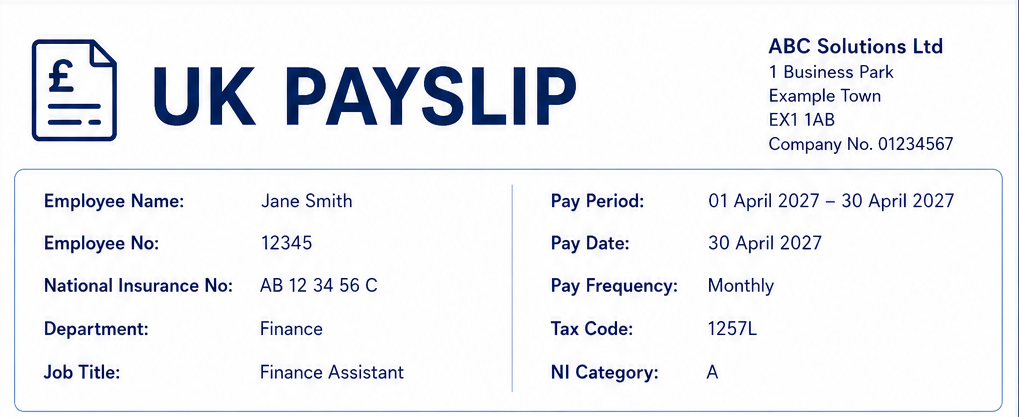
From April 2027, employees will see tax on benefits deducted monthly through payroll rather than as a year-end adjustment. This may affect monthly take-home pay and should be clearly communicated to staff in advance.
Transitional Considerations and Potential “Double Taxation”
Under the current system tax on employment benefits is paid in arrears. Under the new system the tax will be paid in real time and this may cause some issues in the 2027/2028 transition year:
- The Problem: In April 2027, an employee might pay tax on the 2026/27 benefit (via a P11D adjustment still in their tax code) and pay tax on their 2027/28 benefits in real time.
- Mitigation: Employers must communicate clearly to employees that are paying tax on current benefits while simultaneously settling old arrears. If this causes financial hardship, employees should contact HMRC to spread the underpayment over a longer period.
Penalties and HMRC Approach
HMRC has indicated a “light touch” approach to penalties for the 2027/28 tax year, focusing primarily on deliberate non-compliance. Full penalty enforcement is expected from 2028/29 onwards.
Actions to Take Now
- Review your current benefits offered and identify items that will need to be payrolled.
- Ensure your payroll system is capable of handling real-time benefit reporting and Class 1A NIC calculations.
- Plan employee communications to explain the impact on payslips and net pay.
- Assess processes for maintaining detailed and auditable records.